Bubble Pop Games for Toddlers
An ad-free bubble pop game that builds hand-eye coordination and cause-and-effect skills—calm, COPPA-minded play parents can trust for ages 1–4.
- Zero ads
- No outbound links in play
- Calm sound design
See Bubble Pop in action
Bright bubbles, clear tap feedback, and calm celebrations—built so parents can judge the experience before a toddler ever taps Play.
UI gallery
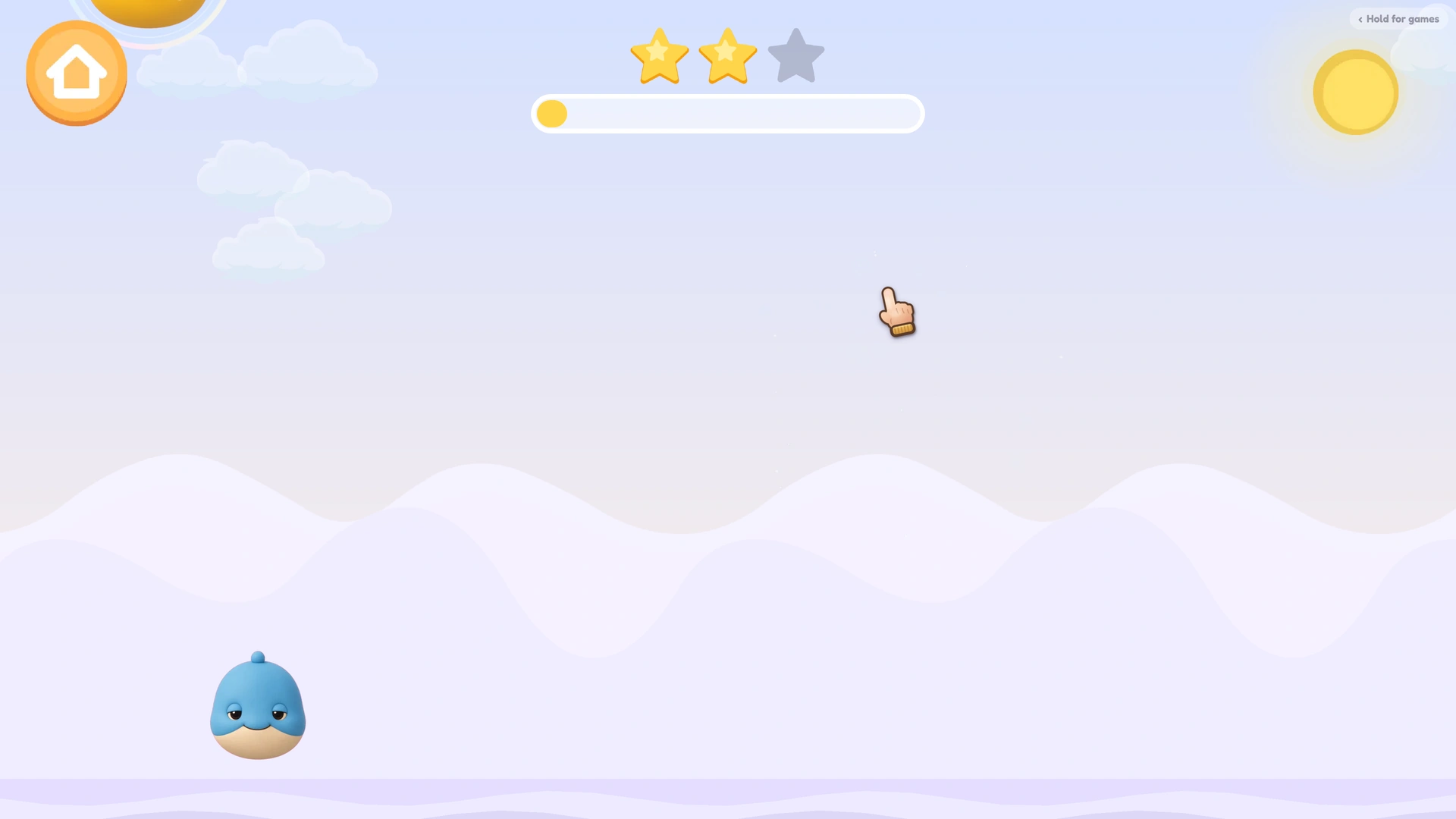
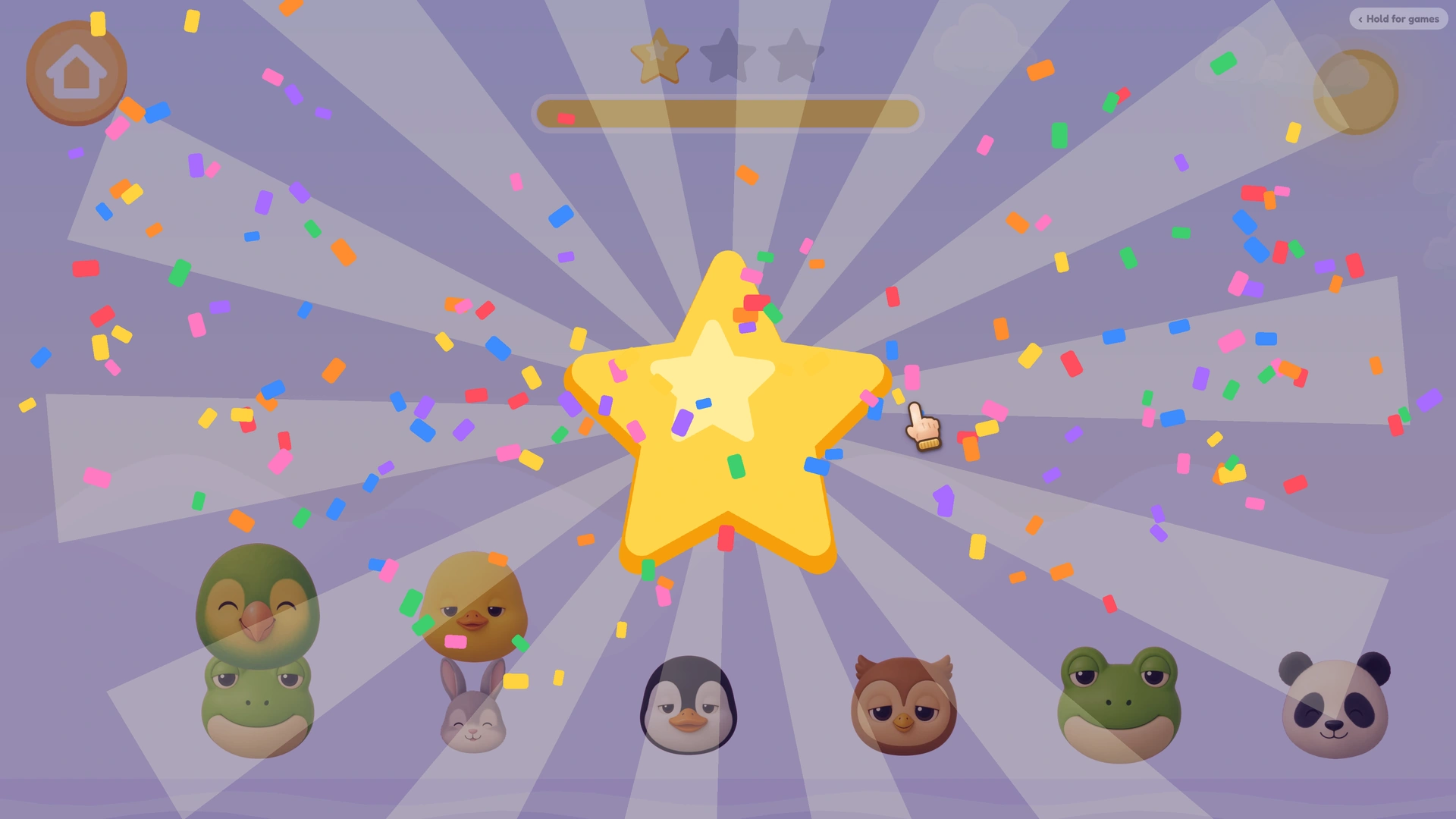
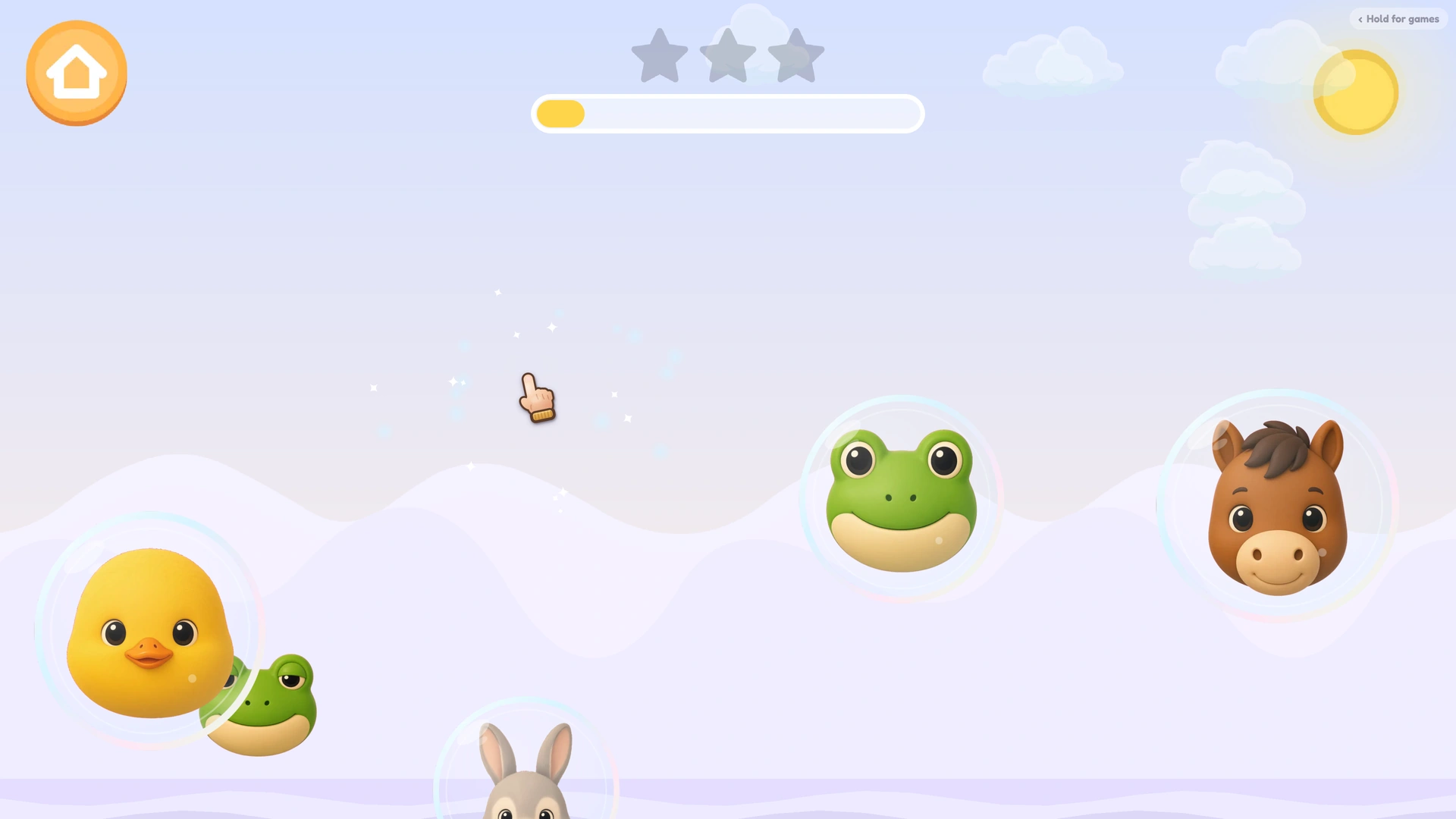
Swipe to preview levels, color themes, and milestone rewards.
Visual tracking & motor skills (ages 1–3)
Child-development research on early visuomotor learning points to the same practice loop Bubble Pop uses:watch a moving target, predict its path, and reach to touch it. That loop strengthens hand-eye coordination, visual tracking, and fine motor control in toddlers who are still mastering precise finger taps.
- Visual tracking: Bubbles drift slowly enough for 1–3-year-olds to follow with their eyes before committing a tap—practice that supports later reading and ball play.
- Hand-eye coordination: Each successful pop pairs what the child sees with where the finger lands, building the sensorimotor map used in drawing, stacking, and self-feeding.
- Fine motor control: Large targets forgive imprecise aim, then gradually invite smaller, more deliberate taps as levels advance—without punishing misses.
Nothing “fails” if a bubble floats away. Another one appears, so practice stays playful instead of frustrating—the condition under which toddlers actually keep rehearsing motor skills.
Cognitive benefits: cause-and-effect without overload
Developmental science describes early cognition as built from repeated,immediate feedback loops. When a toddler taps and instantly hears a pop, sees the bubble burst, and watches an animal wiggle free, the brain registers a clear contingency: “I did that.”
- Cause and effect: One action → one predictable result. That contingency is a foundation for problem-solving and agency.
- Spatial awareness: Tracking where bubbles are, where they are going, and where a finger must meet them rehearses spatial prediction in a low-stakes setting.
- Early cognitive processing: Short rounds, a visible progress meter, and a cheerful ending give structure without demanding language-heavy instructions.
Waddli keeps stimulation in the “delight” zone: soft pops, friendly animal cues, and celebration that resolves quickly. There are no countdown timers, no jump-scare stings, and no escalating difficulty that turns a calm session into sensory overload.
Screen-time safety guarantee
Pediatric guidance for young children emphasizes co-viewing, calm content, and environments free of commercial pressure. Bubble Pop on Waddli is designed to meet that bar.
- Zero aggressive ads
No banners, interstitial videos, or store pop-ups during play.
- Zero external outbound links
Inside the playroom, toddlers stay in the game—no surprise exits.
- COPPA-minded design
No account, no chat, and no data harvest required to play.
- Calm acoustic design
Soft pops and short celebrations meant to regulate mood, not overstimulate.
How Bubble Pop works
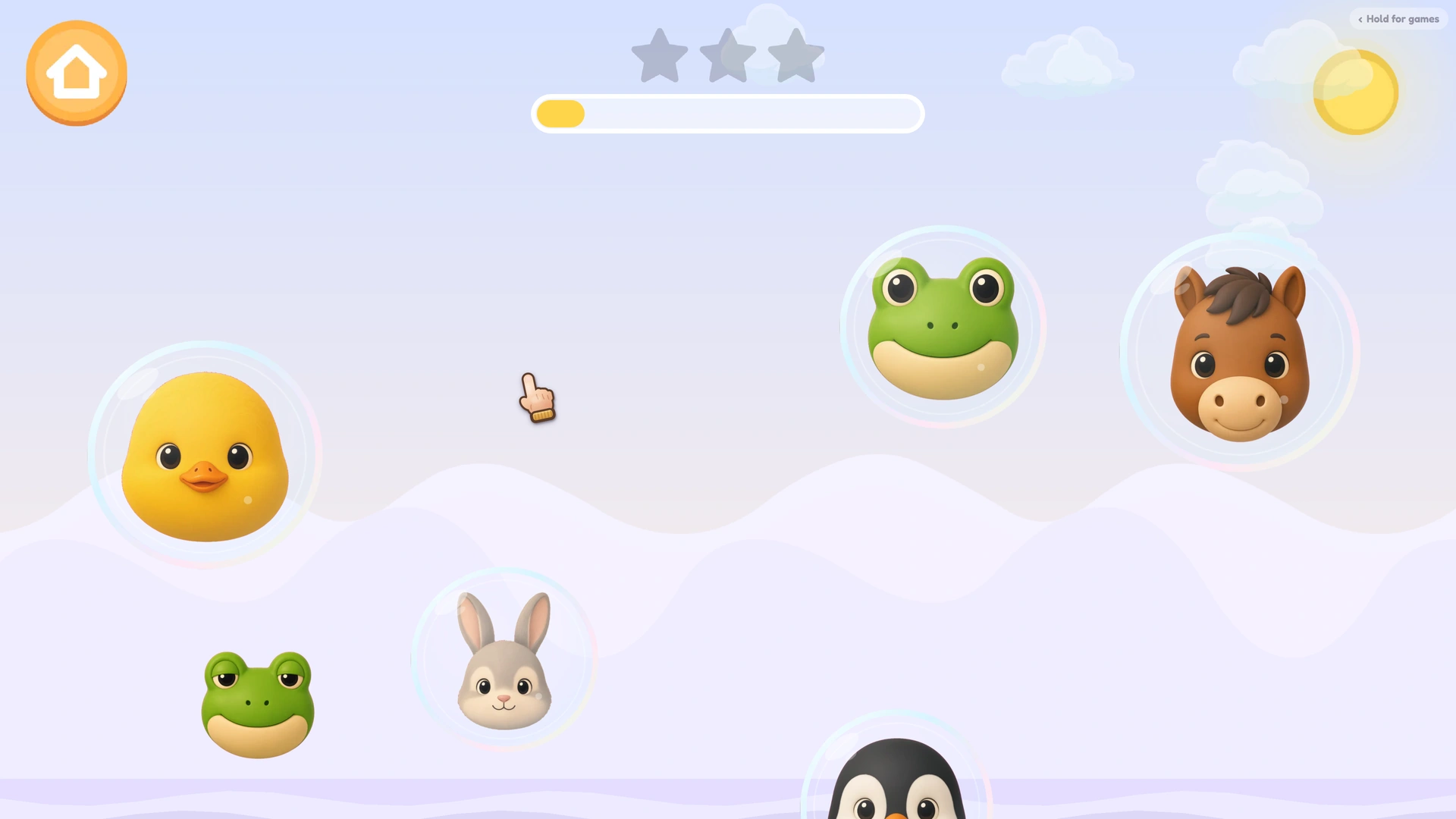
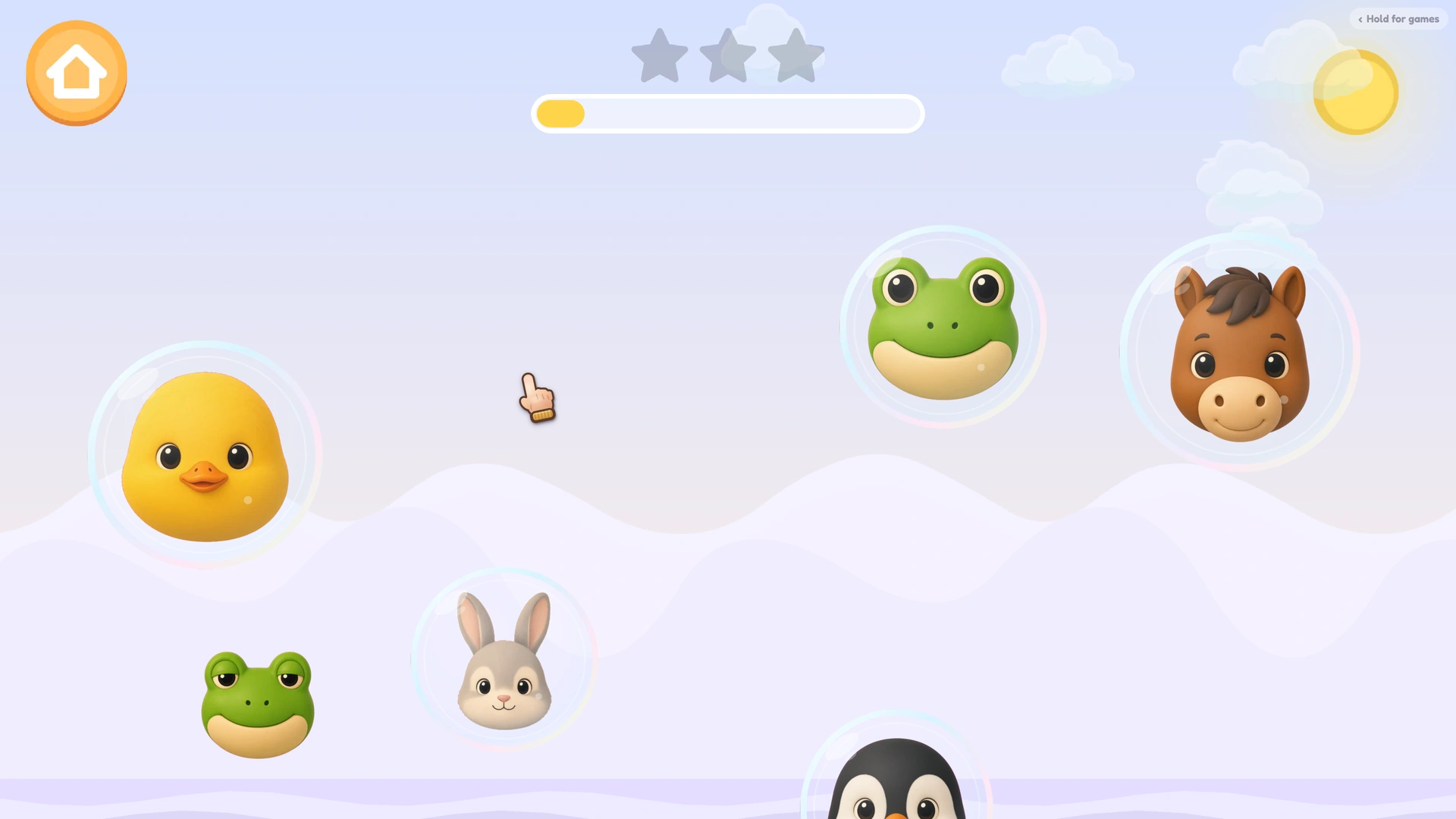
Big shiny bubbles drift up the screen. Inside each one is a friendly animal—duck, penguin, panda, frog, and more. A tap pops the bubble with a happy sound and frees the animal. A bright meter fills with every pop; when it is full, the round ends with a cheerful celebration.
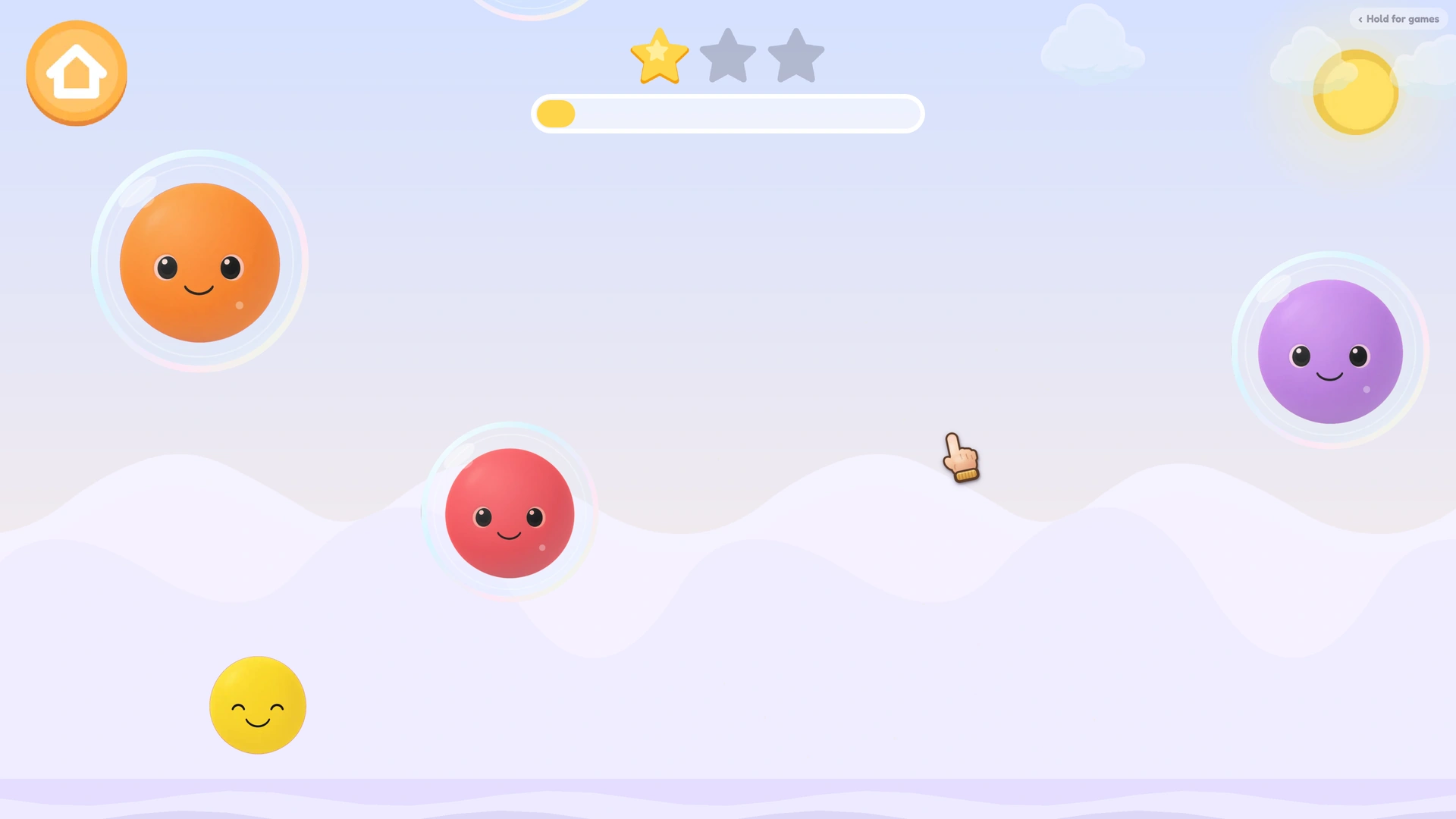
Three short levels keep sessions bite-sized: slow extra-large animal bubbles, colorful balloons, then a gentle mix that moves a little faster. If a bubble floats away, another is always on its way—no lives lost, no game over.
Tips for playing together
- Sit close for the first round. Point to a bubble and say “pop!” Shared excitement keeps toddlers engaged.
- Name colors on the balloon level. “You popped the red one!” turns tapping into early color practice.
- Keep it short. One or two rounds is a satisfying session for a two-year-old. End on a celebration.
- Take it off the screen. Real bubbles in the bath or backyard are the perfect follow-up.
More toddler games like this
Play Bubble Pop and related games
Start with Bubble Pop, or try another calm Waddli game that builds the same early skills.
Bubble Pop
Ages 2–4
Pop floating balloons across the screen to free the friendly animals inside and guide them to safety.
Play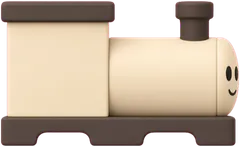
Color Train
Ages 2–4
Pop balloons to release colored toys, then drag each toy into the matching colored wagon on the train.
Play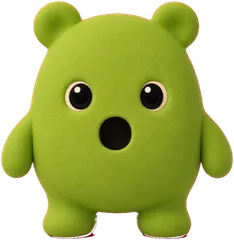
Hungry Monsters
Ages 2–5
Pop balloons carrying shaped cookies, then drag each cookie straight into the hungry monster's mouth.
Play
Shadow Match
Ages 3–5
Pop balloons to reveal animals, then drag each animal onto its matching dark silhouette outline.
Play
Big and Little
Ages 2–4
Pop balloons to find animals, then drag big animals to the big house and little animals to the little house.
PlayFrequently asked questions
Is Bubble Pop safe for toddlers’ screen time?
Yes for short, shared sessions. Bubble Pop has zero ads, zero outbound links in the playroom, no account requirement, and calm audio designed to regulate rather than overstimulate—aligned with pediatric guidance that favors co-viewing and ad-free environments for young children.
What developmental skills does bubble popping support?
Bubble-popping mechanics practice visual tracking, hand-eye coordination, and fine motor control for ages roughly 1–3. Immediate visual and audio feedback also teaches cause-and-effect reasoning and early spatial awareness without punishing mistakes.
Is Bubble Pop free to play?
Yes. Bubble Pop is free in the browser with no ads and no account.
What ages is Bubble Pop best for?
Most families use Bubble Pop with children around 2–4 years old. Younger toddlers benefit from a grown-up sitting nearby for the first rounds; older siblings often enjoy the faster third level.
Ready for a calm bubble session? Free in the browser, zero ads, no account, and soft feedback made for small hands.
Play Bubble Pop